DSW Candidate – Aya Qundeel
$0.00
Virtual Showcase of DSW Scholars 2026 Event!
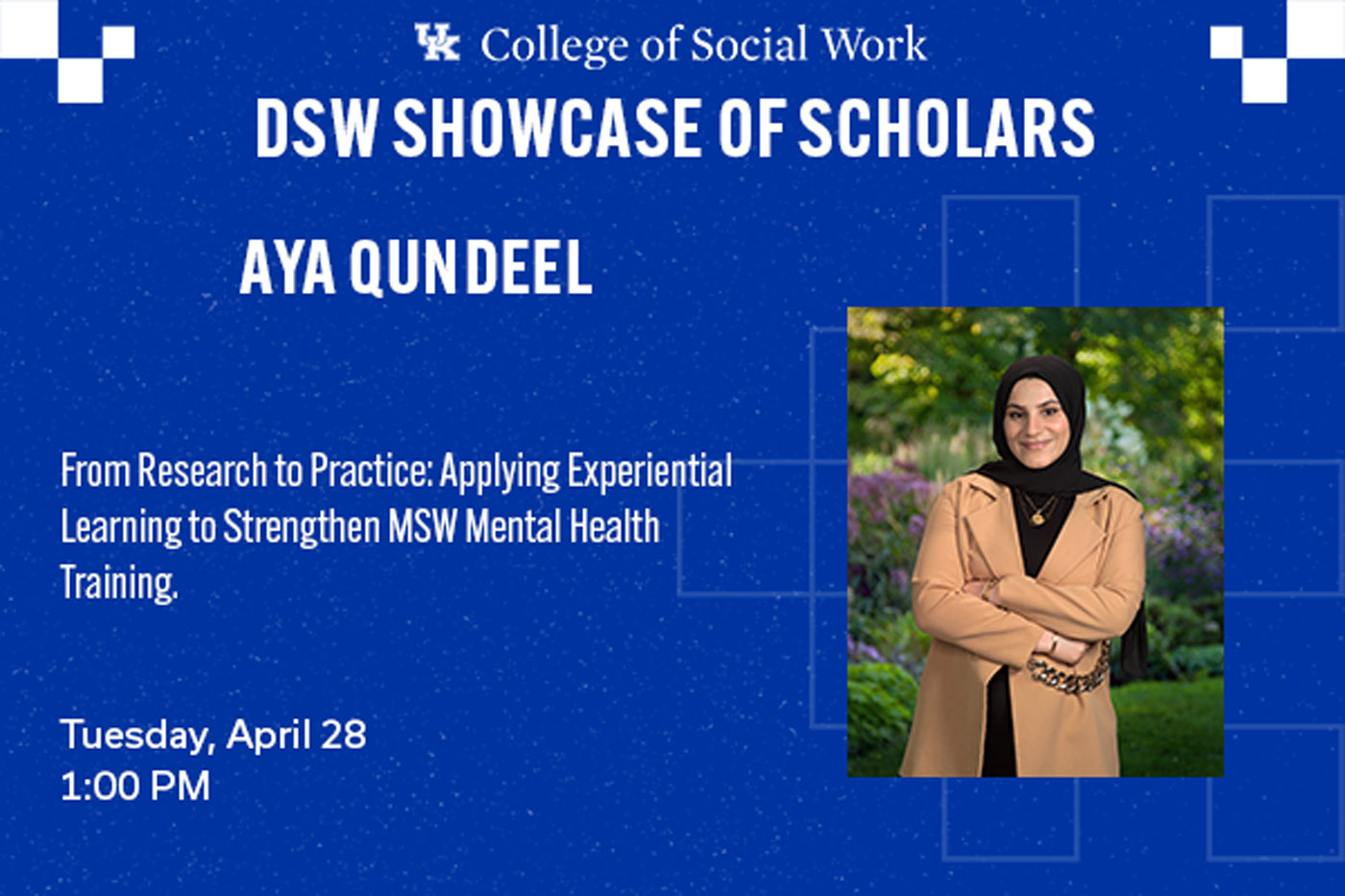
From Research to Practice: Applying Experiential Learning to Strengthen MSW Mental Health Training.
DSW Candidate – Aya Qundeel
Tuesday, April 28, 2026
1:00 – 2:15 PM Eastern Time Zone
Credit Hours: 1.0 (ACE)
Description
From Research to Practice: Applying Experiential Learning to Strengthen MSW Mental Health Training.
Learning Objectives:
Upon completion of this conference, participants will be able to:
1. Analyze factors contributing to clinical unpreparedness among MSW students entering mental health practice, with attention to assessment, diagnostic reasoning, intervention planning, and ethical decision-making.
2. Explain how experiential learning theory and evidence-informed teaching strategies contribute to improved clinical competence and readiness for mental health practice.
3. Discuss the application of a Clinical Mental Health Skills Lab as a scalable educational intervention to enhance student confidence, consistency of training, and readiness for field placement and licensure.
Presenter Bio
I’m Aya Qundeel, a Licensed Clinical Social Worker and Doctor of Social Work candidate at the University of Kentucky. I work as both a mental health therapist and a school counselor, providing me with direct experience in supporting individuals in clinical and educational settings. My capstone project addresses the issue of clinical unpreparedness among MSW students entering the mental health field. Although social workers provide the majority of mental health services, research shows that many graduates feel underprepared in core clinical skills such as assessment, diagnostic reasoning, treatment planning, and crisis intervention.
Through a review of the literature, I found that traditional classroom instruction and field education alone are often insufficient. Field placements vary widely, and students frequently lack structured opportunities to practice mental health skills in a supportive way. Evidence strongly supports experiential learning, simulation, and structured reflection as strategies to build confidence, competence, and readiness for practice. Based on these findings, I developed the Experiential Mental Health Training Framework, which integrates experiential learning theory and adult learning principles to strengthen clinical training in MSW programs. Building on this, my practice application will implement a required Clinical Mental Health Skills Lab, providing students with hands-on opportunities to practice assessment, intervention, and ethical decision-making alongside field placements.
The goal is to help MSW students graduate with the knowledge, skills, and confidence needed to serve diverse populations effectively, bridging classroom learning and real-world practice to prepare social workers who are capable, compassionate, and ready to make a meaningful impact.
Delivery Method: Live Interactive Training via Zoom Video Conferencing
Credit Hours: 1.0 (ACE)
Target Audience: This conference is intended for social workers and students.
Accreditation: University of Kentucky College of Social Work, Provider # 1377, is approved as an ACE provider to offer social work continuing education by the Association of Social Work Boards (ASWB) Approved Continuing Education (ACE) program. Regulatory boards are the final authority on courses accepted for continuing education credit. ACE provider approval period: 9/29/25-9/29/28. Social workers participating in this conference will receive up to 15 general continuing education credits.
Claiming CE Credit: Instructions for claiming CE credit will be disseminated at the beginning of each session.
Questions: If you have any questions regarding CE credit or to report a grievance, please contact Christina Krantz at Christina.Krantz@uky.edu. For technical assistance, please contact lmshelp@uky.edu.
Disclaimer: The views and opinions expressed in these presentations are those of the individual presenters and do not necessarily reflect the official policies or positions of the University of Kentucky or the College of Social Work. The inclusion of any topics, perspectives, or discussions is intended for academic engagement and does not constitute endorsement by the institution.