DSW Candidate – Araceili Quisano
$0.00
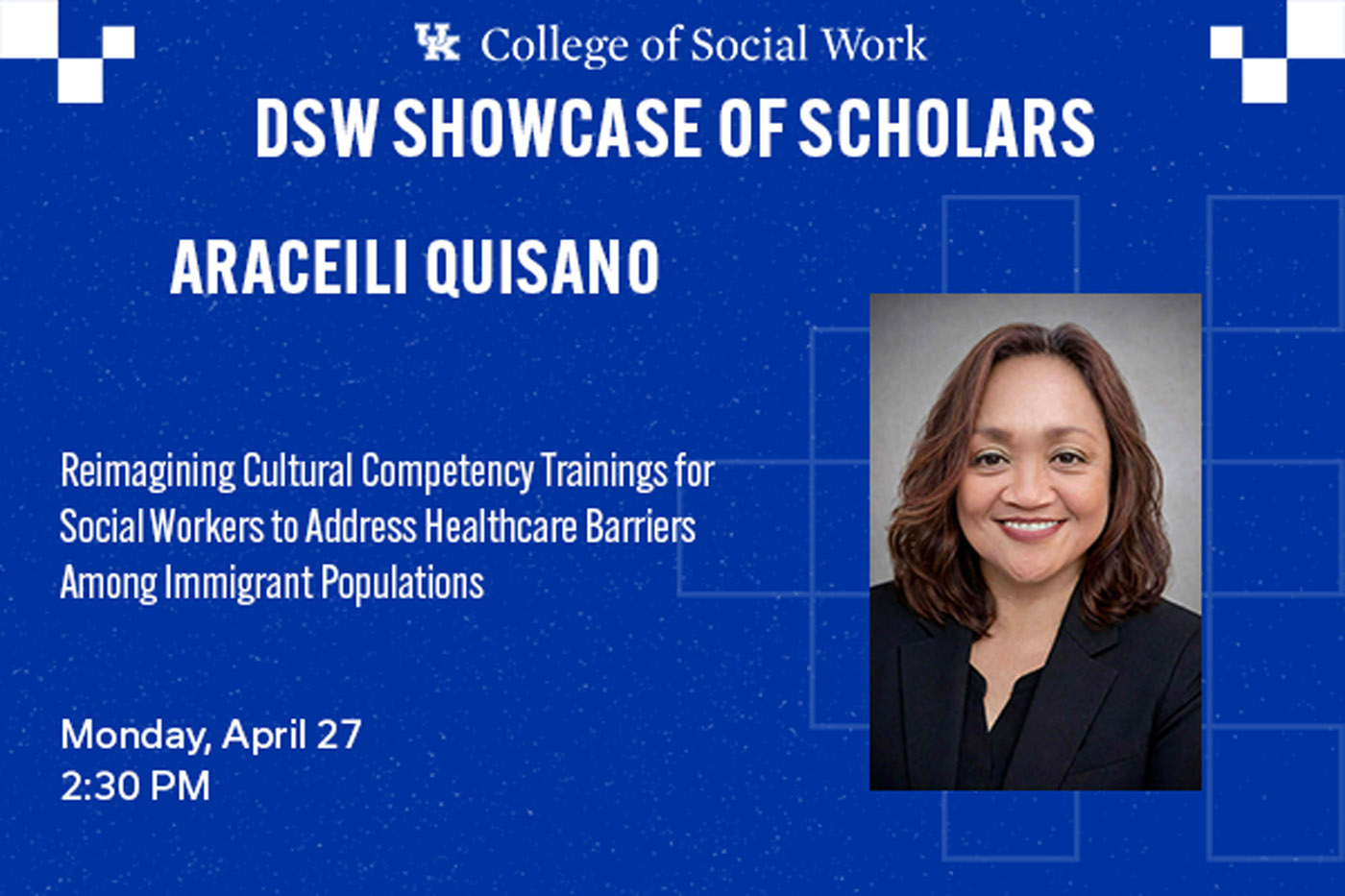
Virtual Showcase of DSW Scholars 2026 Event!Reimagining Cultural Competency Trainings for Social Workers to Address Healthcare Barriers Among Immigrant Populations
DSW Candidate – Araceili Quisano
Monday, April 27, 2026
2:30 PM-3:45 PM Eastern Time Zone
Credit Hours: 1.0 (ACE)
Description
Reimagining Cultural Competency Trainings for Social Workers to Address Healthcare Barriers Among Immigrant Populations
Learning Objectives:
Upon completion of this conference, participants will be able to:
- Identify healthcare barriers specific to immigrant status in the United States.
- Evaluate the limitations of current cultural competency training for social workers and other healthcare professionals and highlight the need for continuous, evidence-based learning
- Apply adult learning theory, intersectionality theory, and cultural humility to the development and delivery of culturally informed care
- Implement a comprehensive training curriculum that empowers clinicians to provide equitable, culturally responsive care and improve health outcomes for immigrant groups.
Presenter Bio
Araceili Alconcel Quisano is a Licensed Independent Social Worker (LICSW), Certified Case Manager (CCM), and a DSW Candidate with more than 23 years of distinguished experience in the field of social work. She holds a Bachelor of Science in Social Work from Hawaii Pacific University and a Master of Social Work from Eastern Washington University. She is currently a Doctoral Candidate in Social Work at the University of Kentucky.
Her research centers on dismantling structural barriers to healthcare access, with an emphasis on how social workers can effectively address the challenges of working with immigrant populations. By challenging traditional frameworks and reimagining cultural competency training focused on equity‑driven approaches, she aims to strengthen professional practice and promote a more equitable and receptive healthcare system.
Araceili is a behavioral clinician and clinical trainer for a not-for-profit healthcare insurance provider in Washington state. She specializes in behavioral health and substance use disorders and advocates for members as they navigate complex healthcare systems. She supports individuals nationwide by reducing barriers to care, coordinating care management to address comorbidities, and promoting improved health outcomes. As a clinical trainer, she provides onboarding training for new clinicians, strengthens team performance, delivers training on health equity and the cultural factors that shape healthcare decisions, and provides cultural consultation and mentors staff in their professional development.
She also serves as an adjunct faculty at two universities, teaching and mentoring emerging MSW professionals, and sits on the board of a local organization dedicated to building strong family relationships.
Delivery Method: Live Interactive Training via Zoom Video Conferencing
Credit Hours: 1.0 (ACE)
Target Audience: This conference is intended for social workers and students.
Accreditation: University of Kentucky College of Social Work, Provider # 1377, is approved as an ACE provider to offer social work continuing education by the Association of Social Work Boards (ASWB) Approved Continuing Education (ACE) program. Regulatory boards are the final authority on courses accepted for continuing education credit. ACE provider approval period: 9/29/25-9/29/28. Social workers participating in this conference will receive up to 15 general continuing education credits.
Claiming CE Credit: Instructions for claiming CE credit will be disseminated at the beginning of each session.
Questions: If you have any questions regarding CE credit or to report a grievance, please contact Christina Krantz at Christina.Krantz@uky.edu. For technical assistance, please contact lmshelp@uky.edu.
Disclaimer: The views and opinions expressed in these presentations are those of the individual presenters and do not necessarily reflect the official policies or positions of the University of Kentucky or the College of Social Work. The inclusion of any topics, perspectives, or discussions is intended for academic engagement and does not constitute endorsement by the institution.