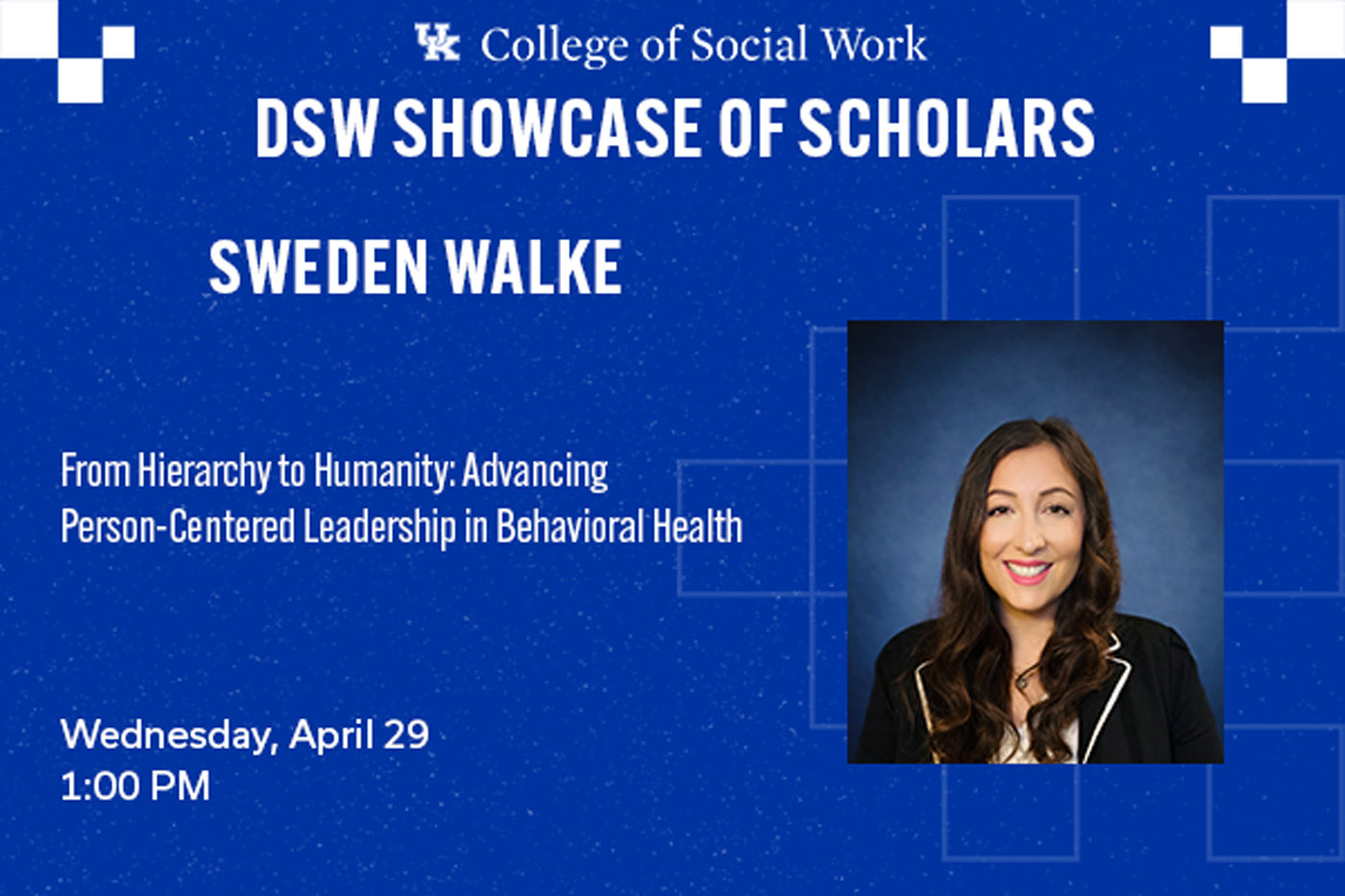
DSW Candidate – Sweden Walke
$0.00
Virtual Showcase of DSW Scholars 2026 Event!
From Hierarchy to Humanity: Advancing Person-Centered Leadership in Behavioral Health
DSW Candidate – Sweden Walke
Wednesday, April 29, 2026
1:00 PM-2:15 PM Eastern Time Zone
Credit Hours: 1.0 (ACE)
Description
From Hierarchy to Humanity: Advancing Person-Centered Leadership in Behavioral Health
Learning Objectives:
Upon completion of this conference, participants will be able to:
- Differentiate between hierarchical, compliance-driven leadership models and person-centered leadership approaches in behavioral health organizations.
- Explain how person-centered leadership, grounded in humanistic theory, transformational leadership theory, and social work ethics, impacts staff well-being, retention, and organizational culture.
- Apply person-centered leadership principles to real-world behavioral health leadership challenges and organizational contexts.
Presenter Bio
Sweden Walke, MSW, LISW, LICDC, is a Doctor of Social Work candidate at the University of Kentucky whose work centers on understanding and strengthening leadership impact, integrated behavioral health, and expanding access to high-quality community-based care. Walke currently serves as a County Manager with Integrated Services for Behavioral Health, where she leads multi-county program development and strategy to support responsive, person-centered behavioral health services. Her professional experience includes a decade in substance use and co-occurring treatment settings, shaping her commitment to harm reduction, integrated service delivery, and non-punitive approaches to behavioral health. She also serves as the Healthy Start Community Consortium Lead and on her region’s Community Health Improvement Plan (CHIP) Committee, supporting public health planning and resource development to address behavioral health needs.
Walke’s research and practice interests focus on transforming leadership approaches within behavioral health organizations to strengthen access, quality, and workforce well-being. Her DSW Capstone Project, From Hierarchy to Humanity: Examining Leadership Styles and Advancing Person-Centered Practice in Behavioral Health, integrates applied research, conceptual analysis, and practice application to propose a reflective leadership model designed to improve organizational culture, service delivery,
and program outcomes.
Walke has been recognized for her ability to rally and motivate teams through a balanced leadership approach grounded in dignity and collaboration. She has presented work on integrated care, leadership development, client engagement, and barriers to medication-assisted treatment, with particular attention to provider and organizational stigma. Her leadership perspective is shaped by her professional experience, lived experience, and life as a mother, grounding her commitment to advancing behavioral health programs that strengthen access, engagement, and person-centered partnership.
Delivery Method: Live Interactive Training via Zoom Video Conferencing
Credit Hours: 1.0 (ACE)
Target Audience: This conference is intended for social workers and students.
Accreditation: University of Kentucky College of Social Work, Provider # 1377, is approved as an ACE provider to offer social work continuing education by the Association of Social Work Boards (ASWB) Approved Continuing Education (ACE) program. Regulatory boards are the final authority on courses accepted for continuing education credit. ACE provider approval period: 9/29/25-9/29/28. Social workers participating in this conference will receive up to 15 general continuing education credits.
Claiming CE Credit: Instructions for claiming CE credit will be disseminated at the beginning of each session.
Questions: If you have any questions regarding CE credit or to report a grievance, please contact Christina Krantz at Christina.Krantz@uky.edu. For technical assistance, please contact lmshelp@uky.edu.
Disclaimer: The views and opinions expressed in these presentations are those of the individual presenters and do not necessarily reflect the official policies or positions of the University of Kentucky or the College of Social Work. The inclusion of any topics, perspectives, or discussions is intended for academic engagement and does not constitute endorsement by the institution.