DSW Candidate – Shaven Abney-Smith
$0.00
Virtual Showcase of DSW Scholars 2026 Event!
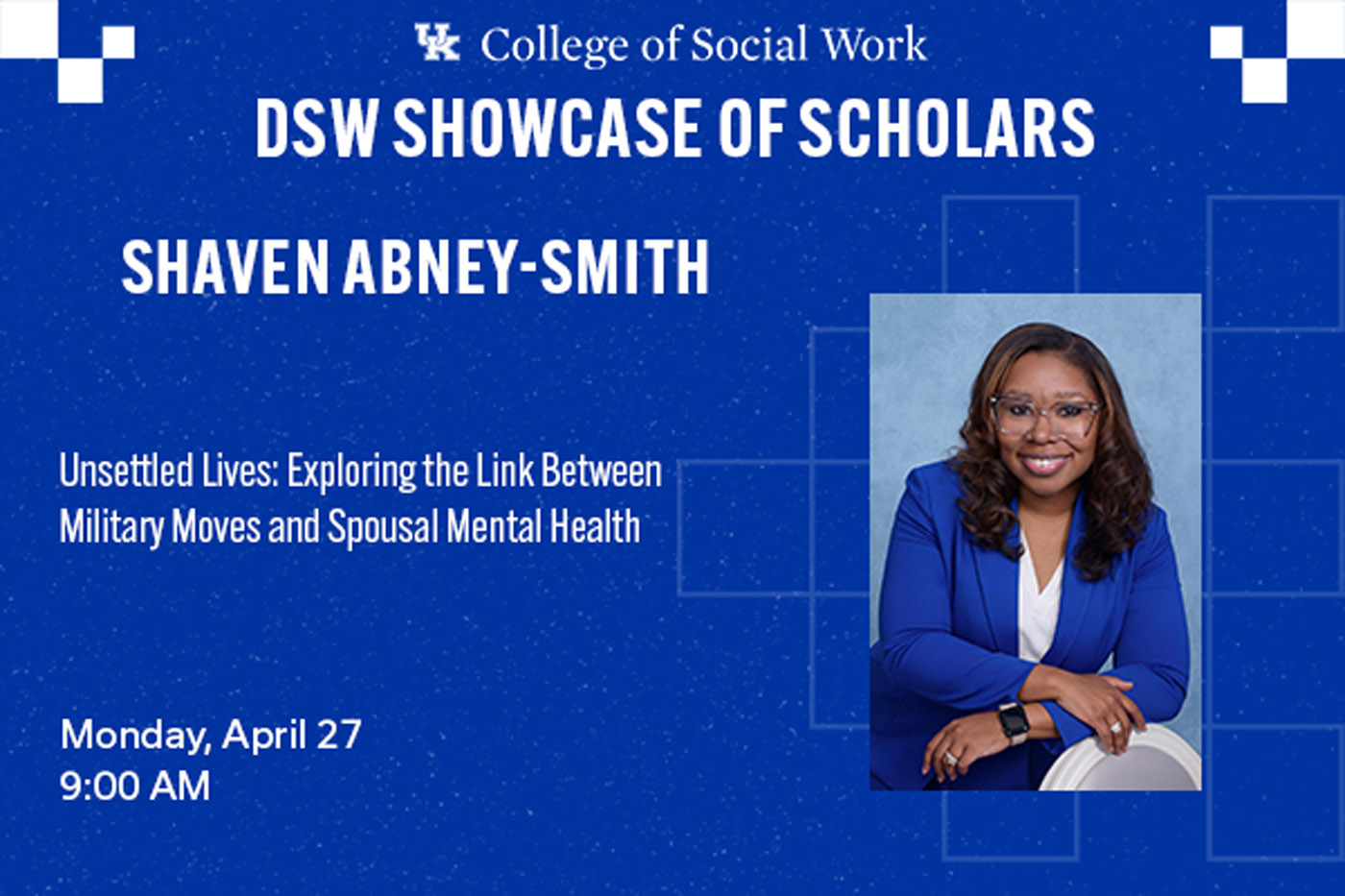
Unsettled Lives: Exploring the Link Between Military Moves and Spousal Mental Health
DSW Candidate – Shaven Abney-Smith
Monday, April 27, 2026
9:00 AM-10:15 PM Eastern Time Zone
Credit Hours: 1.0 (ACE)
Description
Unsettled Lives: Exploring the Link Between Military Moves and Spousal Mental Health
Learning Objectives:
Upon completion of this conference, participants will be able to:
- Participants will be able to explain how frequent permanent changes of station (PCS) create persistent and layered stress across multiple domains of life and influence mental health among military spouses.
- Participants will be able to describe the Integrated Multi-System Framework (IMF) and the theories that inform it.
- Participants will learn to use the IMF in clinical social work practice through spouse-centered assessment and intervention planning to support military spouses better.
- Participants will understand how the IMF guides practice and policy to support military spouse mental health and services.
Presenter Bio
Shaven Abney Smith is a Licensed Clinical Social Worker with advanced training and experience in public administration and social work. She holds a Bachelor of Arts in Political Science, a Master of Public Administration, and a Master of Social Work. Mrs. Smith is currently a Doctoral Candidate at the University of Kentucky, where her research focuses on advancing mental health and overall wellness among military spouses.
Ms. Smith is a Federal Contractor with Magellan Federal, where she provides education to military families and supports parents in navigating the emotional and practical challenges of early parenthood. Her professional experience spans clinical practice, program implementation, and management. She has experience providing services at different system levels within federal, state, and local government. Through this work, she brings a strong practice-informed perspective that bridges clinical intervention and research.
Her research interests center on improving military spouse mental health, with particular attention to how systemic stressors and frequent relocation impact the mental health of military spouses and, in turn, influence the stability of military families. Her research capstone project, titled Unsettled Lives: Exploring the Link Between Military Moves and Spousal Mental Health, examines the psychosocial impact of military relocations on spousal mental health. Ms. Smith has developed the Integrated Multi-System Framework, which helps clinicians tailor their intervention to the person, not just the symptoms.
Ms. Smith’s work highlights her commitment to trauma-informed care and evidence-based practice. It brings research into real-world practice across clinical and organizational settings in military and veteran communities.
Delivery Method: Live Interactive Training via Zoom Video Conferencing
Credit Hours: 1.0 (ACE)
Target Audience: This conference is intended for social workers and students.
Accreditation: University of Kentucky College of Social Work, Provider # 1377, is approved as an ACE provider to offer social work continuing education by the Association of Social Work Boards (ASWB) Approved Continuing Education (ACE) program. Regulatory boards are the final authority on courses accepted for continuing education credit. ACE provider approval period: 9/29/25-9/29/28. Social workers participating in this conference will receive up to 15 general continuing education credits.
Claiming CE Credit: Instructions for claiming CE credit will be disseminated at the beginning of each session.
Questions: If you have any questions regarding CE credit or to report a grievance, please contact Christina Krantz at Christina.Krantz@uky.edu. For technical assistance, please contact lmshelp@uky.edu.
Disclaimer: The views and opinions expressed in these presentations are those of the individual presenters and do not necessarily reflect the official policies or positions of the University of Kentucky or the College of Social Work. The inclusion of any topics, perspectives, or discussions is intended for academic engagement and does not constitute endorsement by the institution.