DSW Candidate – Shana Turner
$0.00
Virtual Showcase of DSW Scholars 2026 Event!
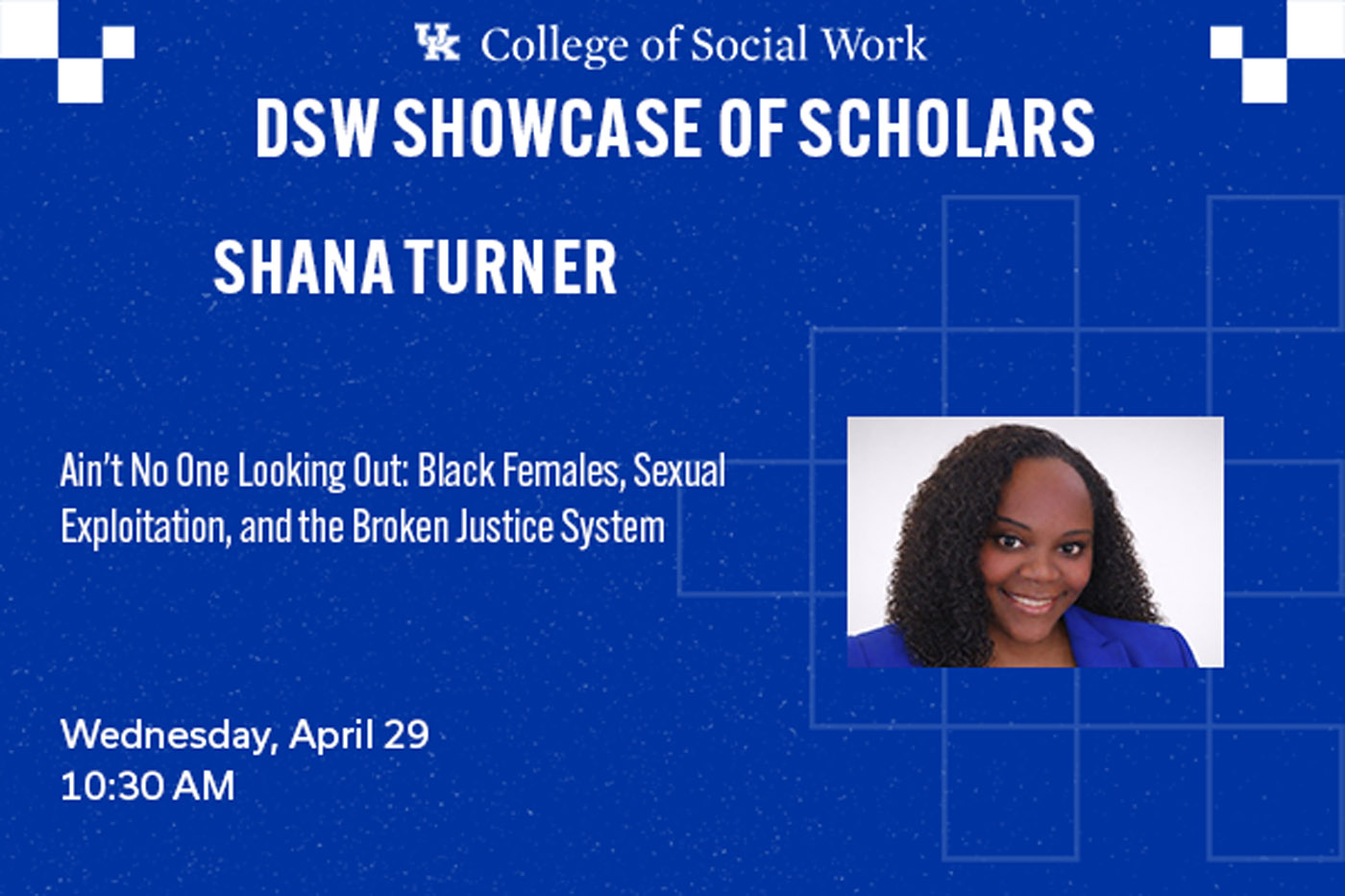
Ain’t No One Looking Out: Black Females, Sexual Exploitation, and the Broken Justice System
DSW Candidate – Shana Turner
Wednesday, April 29, 2026
10:30 AM-11:45 AM Eastern Time Zone
Credit Hours: 1.0 (ACE)
Description
Ain’t No One Looking Out: Black Females, Sexual Exploitation, and the Broken Justice System
Learning Objectives:
Upon completion of this conference, participants will be able to:
- Identify historical and structural factors that are key to the misclassification of sexually exploited African-American females within the justice system.
- Be able to explain how theoretical frameworks form an understanding of racialization in systems that impact gender specific responses.
- Apply and implement principles of Culture-Inherent Justice Theory to promote practice that is trauma-informed and culturally responsive, and multifaceted.
- Examine leadership practices organizationally that law enforcement and social workers can use to reduce disparities, inequities, and improve accountability across systems.
Presenter Bio
Shana Turner is an experienced social worker in the investigative field of social work with more than twenty years of professional practice serving children, families, and justice-involved populations. She holds a Master of Social Work degree from the University of Kentucky and is currently a doctoral candidate at the University of Kentucky with advanced scholarly and professional interests focused on investigative practice, systems accountability, and organizational reform in child welfare and justice settings. Her career encompasses direct practice, investigations, interdisciplinary collaboration, and leadership roles, providing her with a comprehensive understanding of how policy decisions and institutional structures shape frontline outcomes.
A central focus of her work is examining and addressing disproportionality within social service and justice systems, especially for marginalized and overrepresented populations. She is committed to improving organizational practices that sustain inequities and promoting trauma-informed, culturally responsive, and ethically grounded investigative approaches. Her work emphasizes the importance of cross-system collaboration among social workers, law enforcement, and legal professionals to strengthen victim identification, enhance accountability, and minimize systemic harm.
In recognition of her advocacy and dedication to youth and community well-being, she is a recipient of the Stand Up for Youth Award given by the Children’s Advocacy Center, which works collaboratively with social worker practitioners, legal, and law enforcement personnel to support nationwide those who are victims of sexual abuse. Through her doctoral studies, professional experience, and leadership efforts, she seeks to bridge policy, practice, and leadership to develop sustainable solutions that advance equity, improve system responsiveness, and support long-term change.
Delivery Method: Live Interactive Training via Zoom Video Conferencing
Credit Hours: 1.0 (ACE)
Target Audience: This conference is intended for social workers and students.
Accreditation: University of Kentucky College of Social Work, Provider # 1377, is approved as an ACE provider to offer social work continuing education by the Association of Social Work Boards (ASWB) Approved Continuing Education (ACE) program. Regulatory boards are the final authority on courses accepted for continuing education credit. ACE provider approval period: 9/29/25-9/29/28. Social workers participating in this conference will receive up to 15 general continuing education credits.
Claiming CE Credit: Instructions for claiming CE credit will be disseminated at the beginning of each session.
Questions: If you have any questions regarding CE credit or to report a grievance, please contact Christina Krantz at Christina.Krantz@uky.edu. For technical assistance, please contact lmshelp@uky.edu.
Disclaimer: The views and opinions expressed in these presentations are those of the individual presenters and do not necessarily reflect the official policies or positions of the University of Kentucky or the College of Social Work. The inclusion of any topics, perspectives, or discussions is intended for academic engagement and does not constitute endorsement by the institution.