DSW Candidate – Michael Hagenlock
$0.00
Virtual Showcase of DSW Scholars 2026 Event!
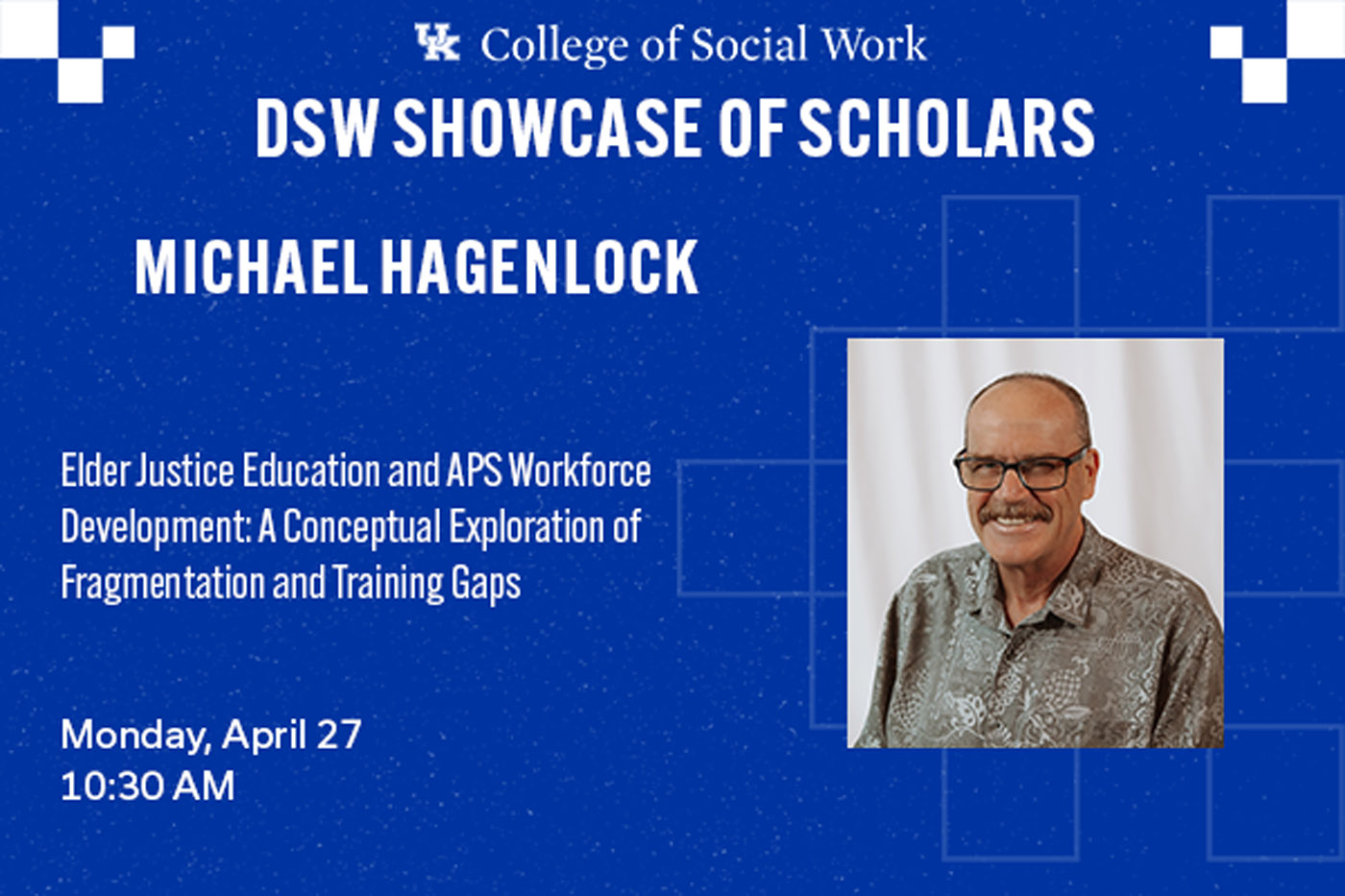
Elder Justice Education and APS Workforce Development: A Conceptual Exploration of Fragmentation and Training Gaps
DSW Candidate – Michael Hagenlock
Monday, April 27, 2026
10:30 AM-11:45 AM Eastern Time Zone
Credit Hours: 1.0 (ACE)
Description
Elder Justice Education and APS Workforce Development: A Conceptual Exploration of Fragmentation and Training Gaps
Learning Objectives:
Upon completion of this conference, participants will be able to:
- Analyze the systemic, structural, and workforce factors contributing to fragmentation within Adult Protective Services (APS), including inequities, inconsistent training standards, and barriers to effective service delivery.
- Integrate social work theories, such as social learning theory, systems theory, and critical gerontology, to construct a coherent, evidence‑informed framework for APS workforce development and elder justice practice.
- Design a competency‑based APS training and leadership model that advances cultural humility, trauma‑informed practice, and organizational consistency to improve outcomes for older adults and adults with disabilities.
Presenter Bio:
Michael Hagenlock, MSW, LCSW, LAC, is a Doctor of Social Work candidate at the University of Kentucky, focused on elder justice and strengthening the Adult Protective Services (APS) workforce. With over 20 years in APS administration, behavioral health, and public-sector program development, Michael offers substantial practical and academic expertise.
Michael currently serves as the Chief Financial Officer for the National Adult Protective Services Association (NAPSA), where he oversees national financial operations, human resources systems, and regulatory compliance. Michael provides subject‑matter expertise to national initiatives, committees, and training development aimed at improving APS practice and elevating workforce standards nationwide.
Michael’s capstone project, Elder Justice: Education and the APS Workforce Development, An Exploration of Fragmentation and Training Gaps, examines how APS programs play a vital role in protecting vulnerable adults, but wide variation in training requirements and systemic fragmentation leave the workforce unevenly prepared and contribute to inconsistent service quality. Therefore, this capstone investigates how these gaps shape practice and identifies opportunities for a unified, competency‑based national training framework. So that APS professionals across the country can operate with consistent skills, stronger decision‑making capacity, and improved readiness to respond to abuse, neglect, and exploitation.
Michael holds an Associate of Science in Accounting, a Bachelor of Science in Sociology/Criminal Justice, and a Master of Social Work. Michael’s contributions to the field have been recognized nationally, including the 2017 NAPSA Presidential Award for Leadership and Innovation and the 2019 Montana Board of Crime Control Innovative Community Improvement Award.
Delivery Method: Live Interactive Training via Zoom Video Conferencing
Credit Hours: 1.0 (ACE)
Target Audience: This conference is intended for social workers and students.
Accreditation: University of Kentucky College of Social Work, Provider # 1377, is approved as an ACE provider to offer social work continuing education by the Association of Social Work Boards (ASWB) Approved Continuing Education (ACE) program. Regulatory boards are the final authority on courses accepted for continuing education credit. ACE provider approval period: 9/29/25-9/29/28. Social workers participating in this conference will receive up to 15 general continuing education credits.
Claiming CE Credit: Instructions for claiming CE credit will be disseminated at the beginning of each session.
Questions: If you have any questions regarding CE credit or to report a grievance, please contact Christina Krantz at Christina.Krantz@uky.edu. For technical assistance, please contact lmshelp@uky.edu.
Disclaimer: The views and opinions expressed in these presentations are those of the individual presenters and do not necessarily reflect the official policies or positions of the University of Kentucky or the College of Social Work. The inclusion of any topics, perspectives, or discussions is intended for academic engagement and does not constitute endorsement by the institution.