DSW Candidate – Meghan Frost
$0.00
Virtual Showcase of DSW Scholars 2026 Event!
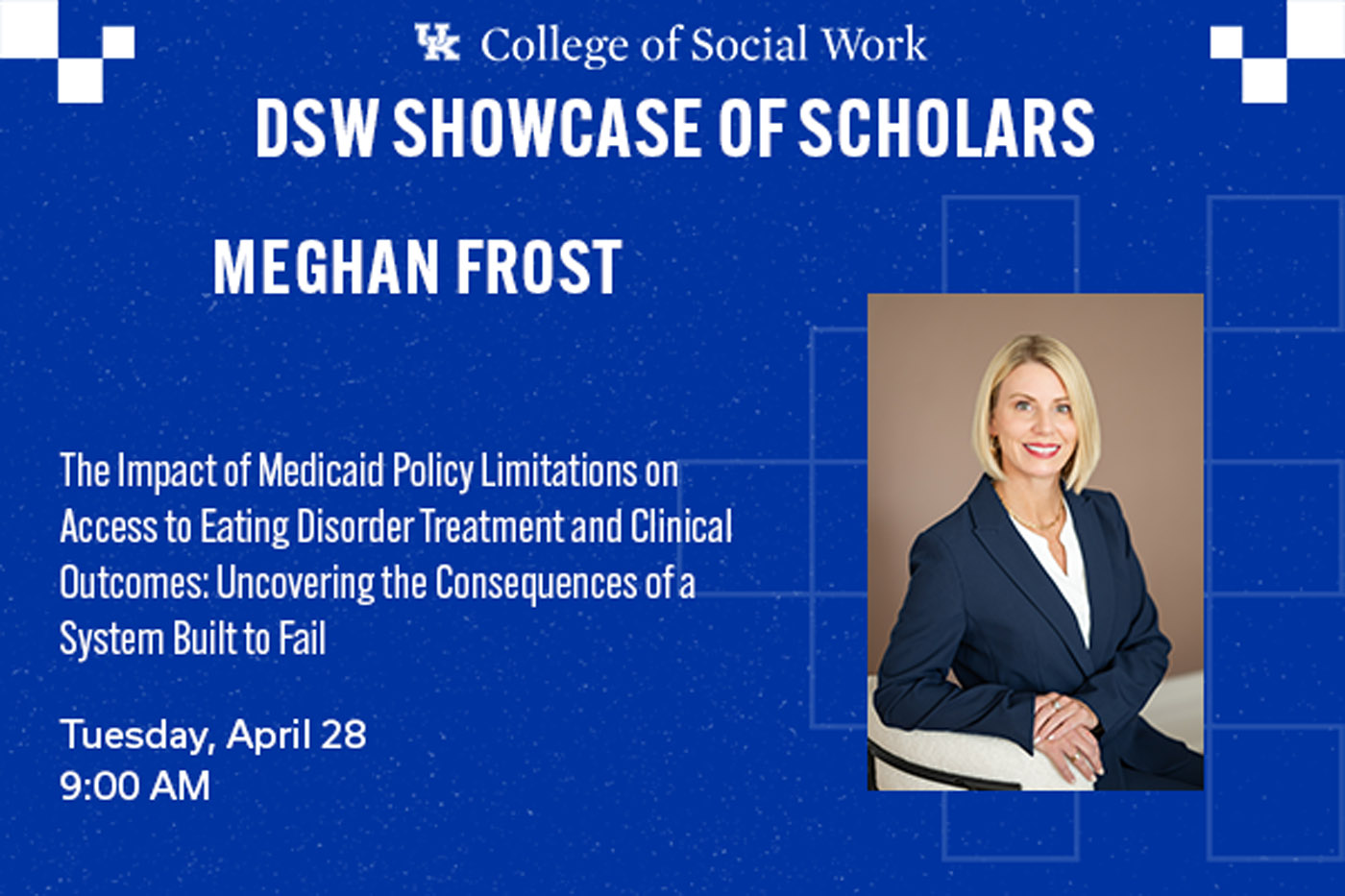
The Impact of Medicaid Policy Limitations on Access to Eating Disorder Treatment and Clinical Outcomes: Uncovering the Consequences of a System Built to Fail
DSW Candidate – Meghan Frost
Tuesday, April 28, 2026
9:00 AM-10:15 AM Eastern Time Zone
Credit Hours: 1.0 (ACE)
Description
The Impact of Medicaid Policy Limitations on Access to Eating Disorder Treatment and Clinical Outcomes: Uncovering the Consequences of a System Built to Fail
Learning Objectives:
Upon completion of this conference, participants will be able to:
- Analyze how Medicaid policy limitations affect access to evidence‑based eating disorder treatment across levels of care. Learners will be able to identify key structural barriers and explain how these barriers shape treatment availability for Medicaid‑insured individuals.
- Evaluate the impact of restricted Medicaid coverage on clinical outcomes and health equity for individuals with eating disorders. Learners will be able to connect policy constraints to real‑world consequences such as delayed care, higher acuity, and disproportionate harm to marginalized populations.
- Propose policy or systems‑level interventions that could improve access, continuity of care, and recovery outcomes for Medicaid‑insured individuals with eating disorders. Learners will be able to articulate feasible reforms grounded in evidence and equity principles.
Presenter Bio
Meghan Chesnut Frost is a Licensed Clinical Social Worker with two decades of experience in behavioral health and healthcare systems. She earned her Bachelor of Social Work from the University of Kentucky in 2002 and her Master of Social Work (Advanced Standing) from the University of Denver in 2003. She is currently a Doctor of Social Work candidate at the University of Kentucky, graduating in May 2026.
In January 2026, Frost founded Meghan Frost LCSW, LLC, a telehealth private practice specializing in life transitions, neurodiversity, and mental health concerns. She also serves as a PRN social worker at UK Healthcare and previously spent five years as a social work manager, supervising up to fifty staff and supporting interdisciplinary care delivery.
Frost’s research centers on inequities in behavioral health access, with a focus on individuals with eating disorders who rely on Medicaid and frequently cannot obtain clinically recommended levels of care. Her doctoral capstone, “The Impact of Medicaid Policy Limitations on Access to Eating Disorder Treatment and Clinical Outcomes: Uncovering the Consequences of a System Built to Fail,” examines the structural and policy barriers that shape treatment availability and outcomes.
She has presented nationally on health equity and the social determinants of mental health, including at the 2023 Health Equity Summit in San Diego and the 2025 6th Annual SDOH & Health Equity Summit in Orlando.
Delivery Method: Live Interactive Training via Zoom Video Conferencing
Credit Hours: 1.0 (ACE)
Target Audience: This conference is intended for social workers and students.
Accreditation: University of Kentucky College of Social Work, Provider # 1377, is approved as an ACE provider to offer social work continuing education by the Association of Social Work Boards (ASWB) Approved Continuing Education (ACE) program. Regulatory boards are the final authority on courses accepted for continuing education credit. ACE provider approval period: 9/29/25-9/29/28. Social workers participating in this conference will receive up to 15 general continuing education credits.
Claiming CE Credit: Instructions for claiming CE credit will be disseminated at the beginning of each session.
Questions: If you have any questions regarding CE credit or to report a grievance, please contact Christina Krantz at Christina.Krantz@uky.edu. For technical assistance, please contact lmshelp@uky.edu.
Disclaimer: The views and opinions expressed in these presentations are those of the individual presenters and do not necessarily reflect the official policies or positions of the University of Kentucky or the College of Social Work. The inclusion of any topics, perspectives, or discussions is intended for academic engagement and does not constitute endorsement by the institution.