DSW Candidate – Maria Magana
$0.00
Virtual Showcase of DSW Scholars 2026 Event!
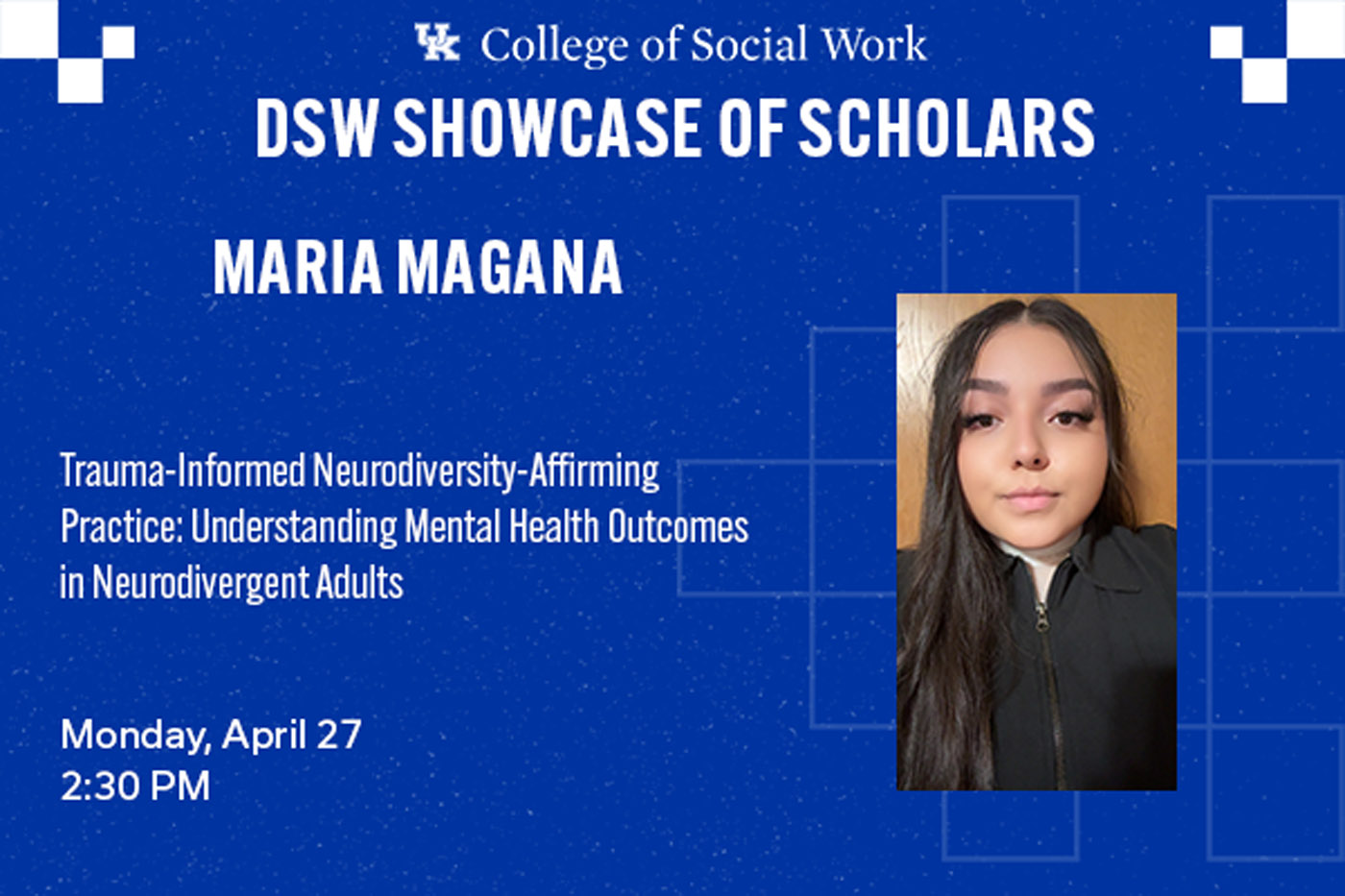
Trauma-Informed Neurodiversity-Affirming Practice: Understanding Mental Health Outcomes in Neurodivergent Adults
DSW Candidate – Maria Magana
Monday, April 27, 2026
2:30 PM- 3:45 PM Eastern Time Zone
Session not eligible for CE credit.
Description
Trauma-Informed Neurodiversity-Affirming Practice: Understanding Mental Health Outcomes in Neurodivergent Adults
Learning Objectives:
Upon completion of this conference, participants will be able to:
- Differentiate masking, shutdowns, and meltdowns from pathological symptoms by describing their adaptive functions within trauma and neurodivergence.
- Identify two or more limitations in traditional trauma treatment approaches that may contribute to retraumatization in neurodivergent clients.
- Apply at least three practical strategies from the Trauma-Informed Neurodiversity-Affirming Framework (TINAF) to support neurodivergent adults in clinical or community-based settings.
Presenter Bio:
Maria Magana holds two associate degrees in Liberal Arts, Arts and Humanities, and Social and Behavioral Sciences from Porterville College. She earned a Bachelor’s in Social Work from Fresno Pacific University and a Master’s in Social Work from Louisiana State University. She is currently a Doctoral Candidate in Social Work at the University of Kentucky. Maria is currently an ASW and serves as an Outpatient Behavioral Therapist at Kaweah Health, a nonprofit hospital-based clinic. In this role, she provides therapy services to low-income individuals and families, many of whom are covered by Medical (Medicaid), employing a client-centered, evidence-based approach tailored to each individual’s needs.
Her research focuses on the intersection of childhood trauma and neurodivergence in adults. Her capstone project examines how adverse childhood experiences influence mental health outcomes among neurodivergent populations, including individuals with autism spectrum disorder (ASD), attention-deficit/hyperactivity disorder (ADHD), and sensory processing differences. Maria explores gaps in current theoretical models and emphasizes the need for interventions that are both trauma-informed and neurodiversity-affirming.
Maria’s work reflects a commitment to enhancing social work practice for neurodivergent clients by promoting equity, inclusivity, and evidence-based care. Her clinical and research efforts aim to improve understanding of how trauma manifests uniquely in neurodivergent populations and to support the development of tailored strategies that foster adaptive coping, emotional regulation, and social functioning.
Delivery Method: Live Interactive Training via Zoom Video Conferencing
Session not eligible for CE credit.
Target Audience: This conference is intended for social workers and students.
Disclaimer: The views and opinions expressed in these presentations are those of the individual presenters and do not necessarily reflect the official policies or positions of the University of Kentucky or the College of Social Work. The inclusion of any topics, perspectives, or discussions is intended for academic engagement and does not constitute endorsement by the institution.