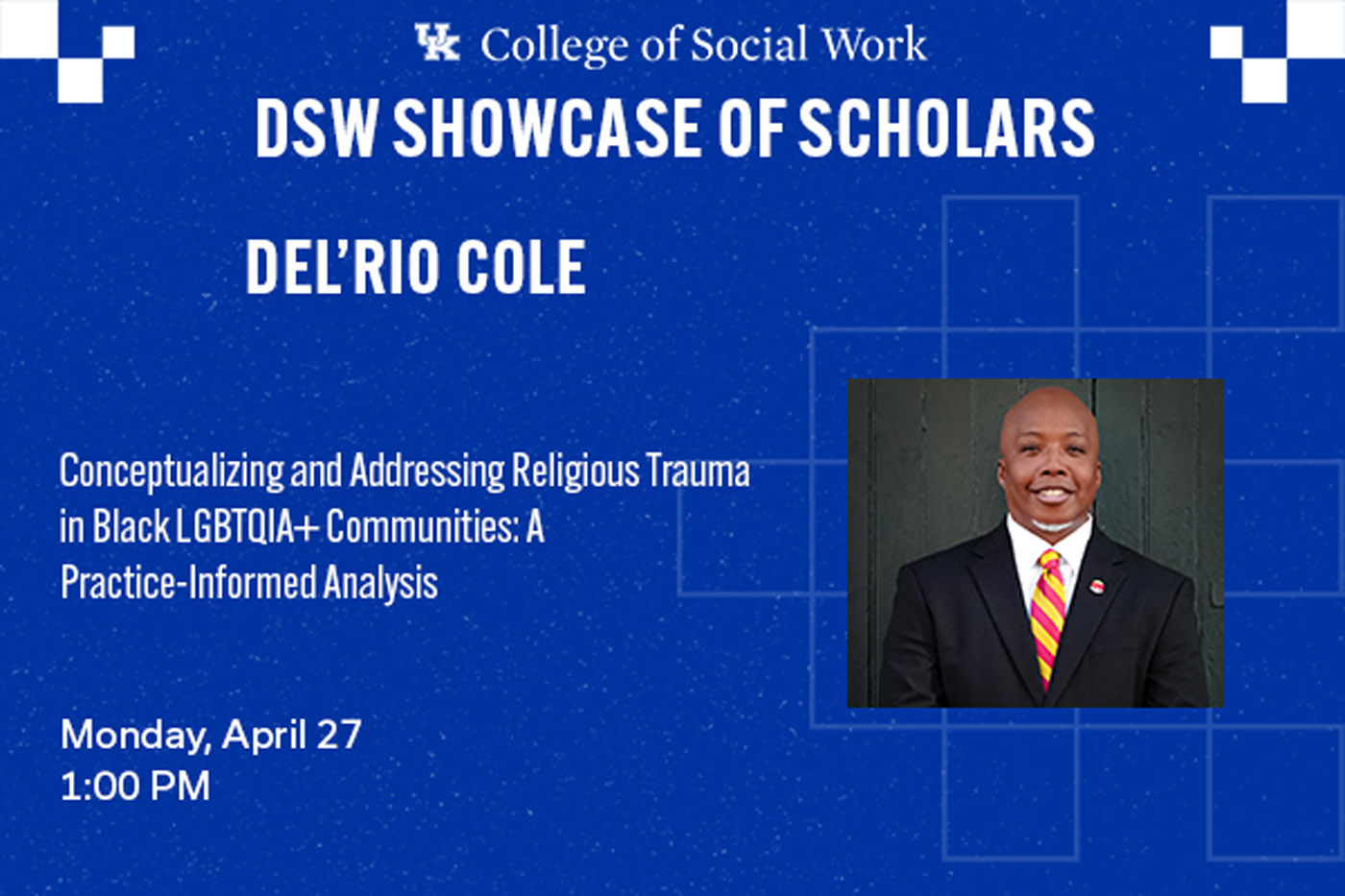
DSW Candidate – Del’Rio Cole
$0.00
Virtual Showcase of DSW Scholars 2026 Event!
Conceptualizing and Addressing Religious Trauma in Black LGBTQIA+ Communities: A Practice-Informed Analysis
DSW Candidate – Del’Rio Cole
Monday, April 27, 2026
1:00 PM-2:15 PM Eastern Time Zone
Credit Hours: 1.0 (ACE)
Description
Conceptualizing and Addressing Religious Trauma in Black LGBTQIA+ Communities: A Practice-Informed Analysis
Learning Objectives:
Upon completion of this conference, participants will be able to:
- Critically examine the spiritual, psychological, and sociocultural dimensions of religious trauma within Black LGBTQIA+ communities, as identified through a systematic synthesis of the literature.
- Explain how intersectionality, minority stress theory, liberation theology, and trauma theory collectively inform a conceptual understanding of spiritual injury and identity disruption in religious contexts.
- Apply the Healing Sacred Wounds conceptual framework to social work practice by identifying assessment considerations, intervention strategies, and ethical implications when working with survivors of religious trauma.
Presenter Bio:
Del’Rio Antoine Cole is a Doctor of Social Work candidate at the University of Kentucky, with an anticipated graduation in May 2026. He holds a Master of Social Work degree from Louisiana State University, a Bachelor of Science in Business Leadership and Management from Bellevue University, and is a Licensed Master Social Worker in the state of Louisiana. Mr. Cole will complete 3000 hours and 2 years of supervision at the end of January 2026, making him eligible for independent licensure. Mr. Cole currently serves as an adjunct instructor in the Millie M. Charles School of Social Work at Southern University at New Orleans and at the University of Kentucky School of Social Work, where he teaches graduate-level courses focused on empowerment-based practice in mental health and research methods.
Mr. Cole’s professional work at BACH Therapeutic Counseling Services centers on trauma-informed care, religious trauma, and the intersectional experiences of Black LGBTQIA+ individuals within faith-based contexts. His research interests include religious abuse, minority stress, identity-affirming clinical practice, and culturally responsive healing frameworks. His doctoral capstone project, Healing Sacred Wounds: Understanding Religious Trauma in the Black LGBTQIA+ Community, examines how harm experienced in religious spaces impacts mental health, identity development, and help-seeking behaviors, while proposing liberation-oriented and trauma-responsive interventions. In addition to his academic role, Mr. Cole is actively engaged in community education, clinical practice, and public scholarship addressing mental health stigma, HIV awareness, and healing in marginalized communities. His work reflects a commitment to social justice and evidence-informed social work practice.
Delivery Method: Live Interactive Training via Zoom Video Conferencing
Credit Hours: 1.0 (ACE)
Target Audience: This conference is intended for social workers and students.
Accreditation: University of Kentucky College of Social Work, Provider # 1377, is approved as an ACE provider to offer social work continuing education by the Association of Social Work Boards (ASWB) Approved Continuing Education (ACE) program. Regulatory boards are the final authority on courses accepted for continuing education credit. ACE provider approval period: 9/29/25-9/29/28. Social workers participating in this conference will receive up to 15 general continuing education credits.
Claiming CE Credit: Instructions for claiming CE credit will be disseminated at the beginning of each session.
Questions: If you have any questions regarding CE credit or to report a grievance, please contact Christina Krantz at Christina.Krantz@uky.edu. For technical assistance, please contact lmshelp@uky.edu.
Disclaimer: The views and opinions expressed in these presentations are those of the individual presenters and do not necessarily reflect the official policies or positions of the University of Kentucky or the College of Social Work. The inclusion of any topics, perspectives, or discussions is intended for academic engagement and does not constitute endorsement by the institution.