DSW Candidate – Ansley Jackson
$0.00
Virtual Showcase of DSW Scholars 2026 Event!
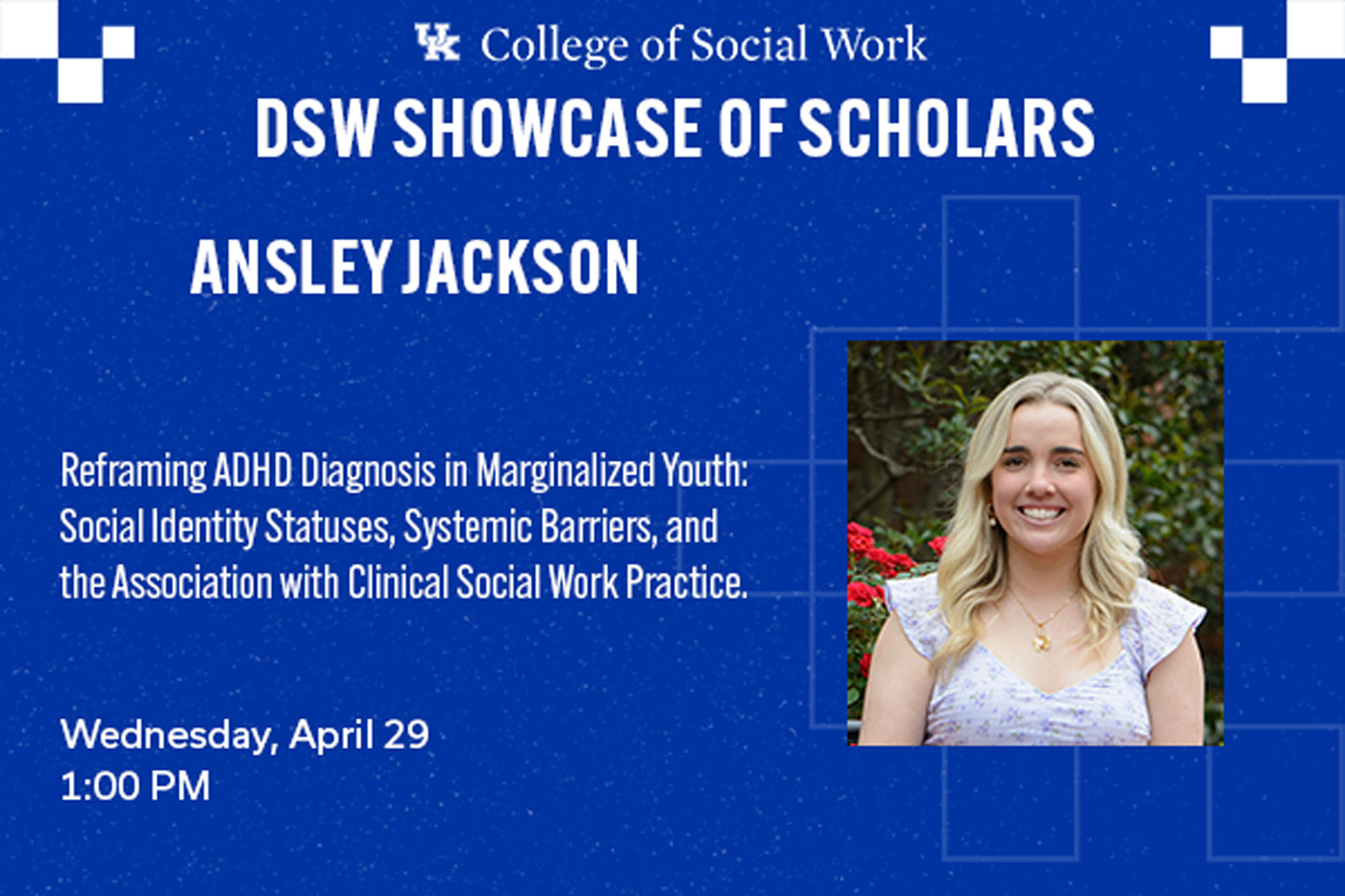
Reframing ADHD Diagnosis in Marginalized Youth: Social Identity Statuses, Systemic Barriers, and the Association with Clinical Social Work Practice.
DSW Candidate – Ansley Jackson
Wednesday, April 29, 2026
1:00 PM – 2:15 PM Eastern Time Zone
Credit Hours: 1.0 (ACE)
Description
Reframing ADHD Diagnosis in Marginalized Youth: Social Identity Statuses, Systemic Barriers, and the Association with Clinical Social Work Practice.
Learning Objectives:
Upon completion of this conference, participants will be able to:
- Recognize how gender, race, and socioeconomic status impact the misdiagnosis and underdiagnosis of marginalized youth.
- Identify disparities in current diagnostic criteria and assessment tools and their association with misdiagnosis and underdiagnosis in marginalized youth.
- Describe and explain the components of the AINS-CBT Model (Active Listening, Influences, Narrative Repair, and Systemic Change).
Presenter Bio
Ansley Jackson is a Licensed Master of Social Worker (LMSW) and a Doctor of Social Work candidate in Clinical Social Work from the University of Kentucky. She earned her Master of Social Work (MSW) and Drug and Addiction Graduate Studies Degree from the University of South Carolina. She received her Bachelor’s degree in psychology from Wofford College while competing on the Women’s Division I Tennis Team. Ansley is an Associate Primary Therapist at Charlie Health, an Intensive Outpatient Program (IOP) that serves a diverse range of clients from 8 to 65 years old with various co-occurring disorders.
Ansley’s professional focus is on clinical practice, supervision, and social justice advocacy. Her scholarly work centers on diagnostic equity in youth mental health care with a particular interest in equity-centered practice, community-based interventions, and policy reform approaches. Ansley’s Capstone Project focuses on how social identity statuses, including race, gender, and socioeconomic status, impact the misdiagnosis and underdiagnosis of Attention-Deficit/Hyperactivity Disorder (ADHD). Informed by Ecological Systems Theory (EST) and Anti-Oppressive Practice (AOP), her scholarship promotes culturally responsive assessment, interdisciplinary competence, collaboration, and structural reform to reduce current systemic bias in mental health care. Her academic excellence has been recognized through the University of South Carolina’s Master of Social Work Student of the Year Award in 2024 and her induction into the Phi Alpha National Honor Society. Her work reflects a commitment to promoting inclusive, equitable, and culturally competent clinical social work practices that not only improve practitioner service delivery but also overall client outcomes.
Delivery Method: Live Interactive Training via Zoom Video Conferencing
Credit Hours: 1.0 (ACE)
Target Audience: This conference is intended for social workers and students.
Accreditation: University of Kentucky College of Social Work, Provider # 1377, is approved as an ACE provider to offer social work continuing education by the Association of Social Work Boards (ASWB) Approved Continuing Education (ACE) program. Regulatory boards are the final authority on courses accepted for continuing education credit. ACE provider approval period: 9/29/25-9/29/28. Social workers participating in this conference will receive up to 15 general continuing education credits.
Claiming CE Credit: Instructions for claiming CE credit will be disseminated at the beginning of each session.
Questions: If you have any questions regarding CE credit or to report a grievance, please contact Christina Krantz at Christina.Krantz@uky.edu. For technical assistance, please contact lmshelp@uky.edu.
Disclaimer: The views and opinions expressed in these presentations are those of the individual presenters and do not necessarily reflect the official policies or positions of the University of Kentucky or the College of Social Work. The inclusion of any topics, perspectives, or discussions is intended for academic engagement and does not constitute endorsement by the institution.