DSW Candidate – Kylie Hoggan
$0.00
Virtual Showcase of DSW Scholars 2026 Event!
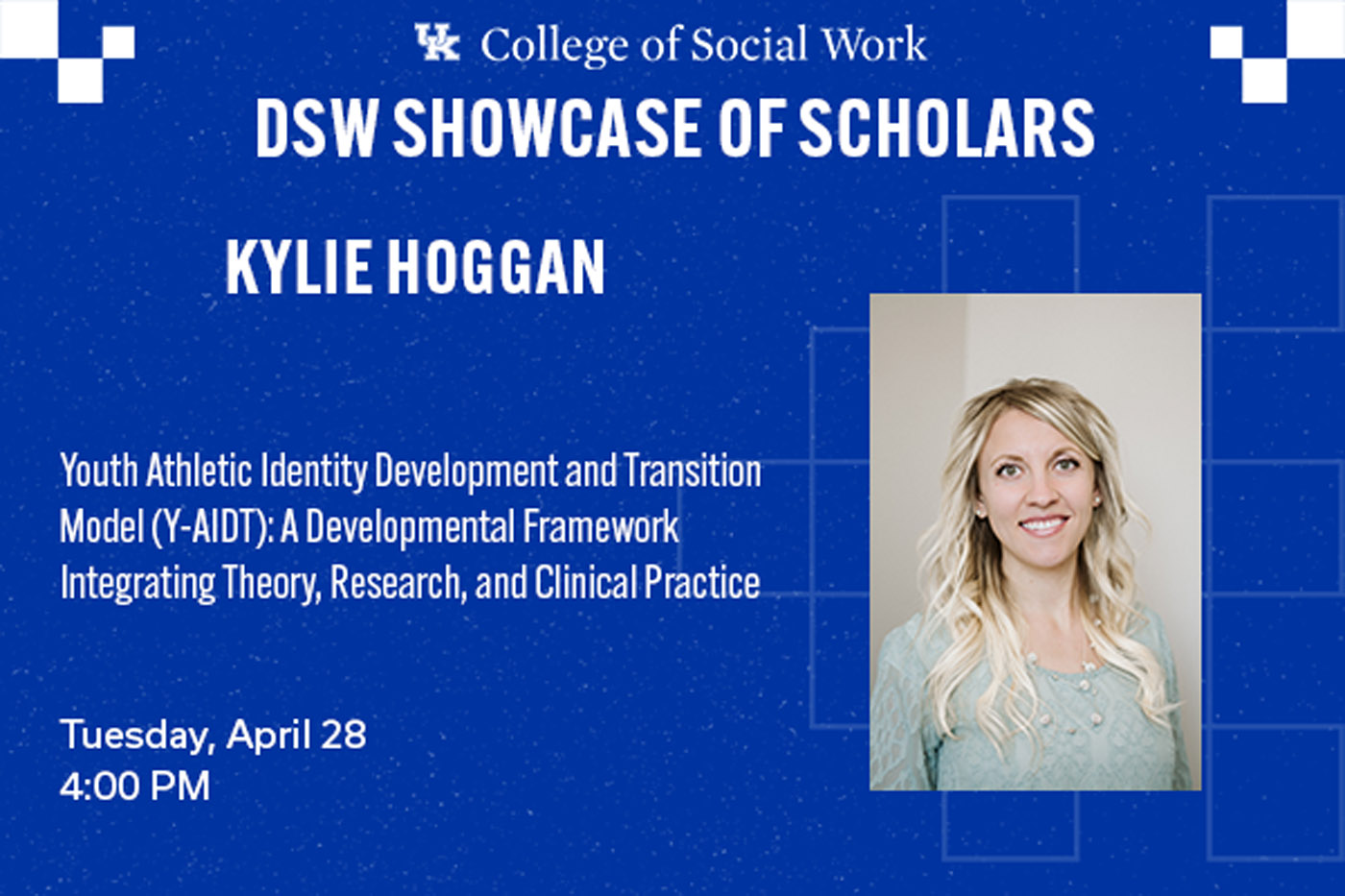
Youth Athletic Identity Development and Transition Model (Y-AIDT): A Developmental Framework Integrating Theory, Research, and Clinical Practice
DSW Candidate – Kylie Hoggan
Tuesday, April 28, 2026
4:00 PM-5:15 PM Eastern Time Zone
Credit Hours: 1.0 (ACE)
Description
Youth Athletic Identity Development and Transition Model (Y-AIDT): A Developmental Framework Integrating Theory, Research, and Clinical Practice
Learning Objectives:
Upon completion of this conference, participants will be able to:
- Identify gaps in existing literature regarding developmentally-specific clinical frameworks for youth athletes experiencing involuntary sport transitions.
- Describe the four developmental stages of the Y-AIDT Model and the theoretical foundations integrating Erikson’s psychosocial development, Marcia’s identity status paradigm, and athletic identity research.
- Differentiate between primary prevention strategies for younger athletes and crisis intervention approaches for older youth experiencing forced transitions.
Presenter Bio:
Kylie Jean Hoggan, MSW, LCSW, is a clinician-scholar whose work sits at the intersection of clinical social work, youth development, and sport. A Licensed Clinical Social Worker with over five years of post-graduate clinical experience, she specializes in trauma-focused interventions with adolescents and adults, with advanced training in Eye Movement Desensitization and Reprocessing (EMDR), Brainspotting, and Trauma-Focused Cognitive Behavioral Therapy (TF-CBT). She holds certification as a Clinical Trauma Specialist and graduated summa cum laude from Utah Valley University.
Hoggan’s clinical career has been defined by progressive leadership and a commitment to training the next generation of practitioners. She has served as Executive Director and Clinical Supervisor of a multi-location mental health practice, where she led operations and provided supervision to graduate-level social work interns. She currently serves as a Lecturer in the Family Science Department at Utah Valley University, where she teaches courses in family life education, clinical skills, trauma-informed care, and family policy.
Her doctoral research emerges directly from patterns she observed in clinical practice — young athletes navigating identity crises after injury, deselection, or other involuntary exits from sport with few evidence-informed resources to guide their care. Her capstone project, the Youth Athletic Identity Development and Transition Model (Y-AIDT), offers a clinical framework integrating developmental theory, systematic research, and practice application to support youth athletes ages 5–19 through these critical transitions.
Hoggan has presented on topics including suicide contagion among adolescents and is an invited speaker at the 2026 Utah School Social Work Association Annual Conference. She is a Doctoral Candidate in the Doctor of Social Work program at the University of Kentucky, with an anticipated graduation date of May 2026.
Delivery Method: Live Interactive Training via Zoom Video Conferencing
Credit Hours: 1.0 (ACE)
Target Audience: This conference is intended for social workers and students.
Accreditation: University of Kentucky College of Social Work, Provider # 1377, is approved as an ACE provider to offer social work continuing education by the Association of Social Work Boards (ASWB) Approved Continuing Education (ACE) program. Regulatory boards are the final authority on courses accepted for continuing education credit. ACE provider approval period: 9/29/25-9/29/28. Social workers participating in this conference will receive up to 15 general continuing education credits.
Claiming CE Credit: Instructions for claiming CE credit will be disseminated at the beginning of each session.
Questions: If you have any questions regarding CE credit or to report a grievance, please contact Christina Krantz at Christina.Krantz@uky.edu. For technical assistance, please contact lmshelp@uky.edu.
Disclaimer: The views and opinions expressed in these presentations are those of the individual presenters and do not necessarily reflect the official policies or positions of the University of Kentucky or the College of Social Work. The inclusion of any topics, perspectives, or discussions is intended for academic engagement and does not constitute endorsement by the institution.