DSW Candidate – Michael Wessel
$0.00
Virtual Showcase of DSW Scholars 2026 Event!
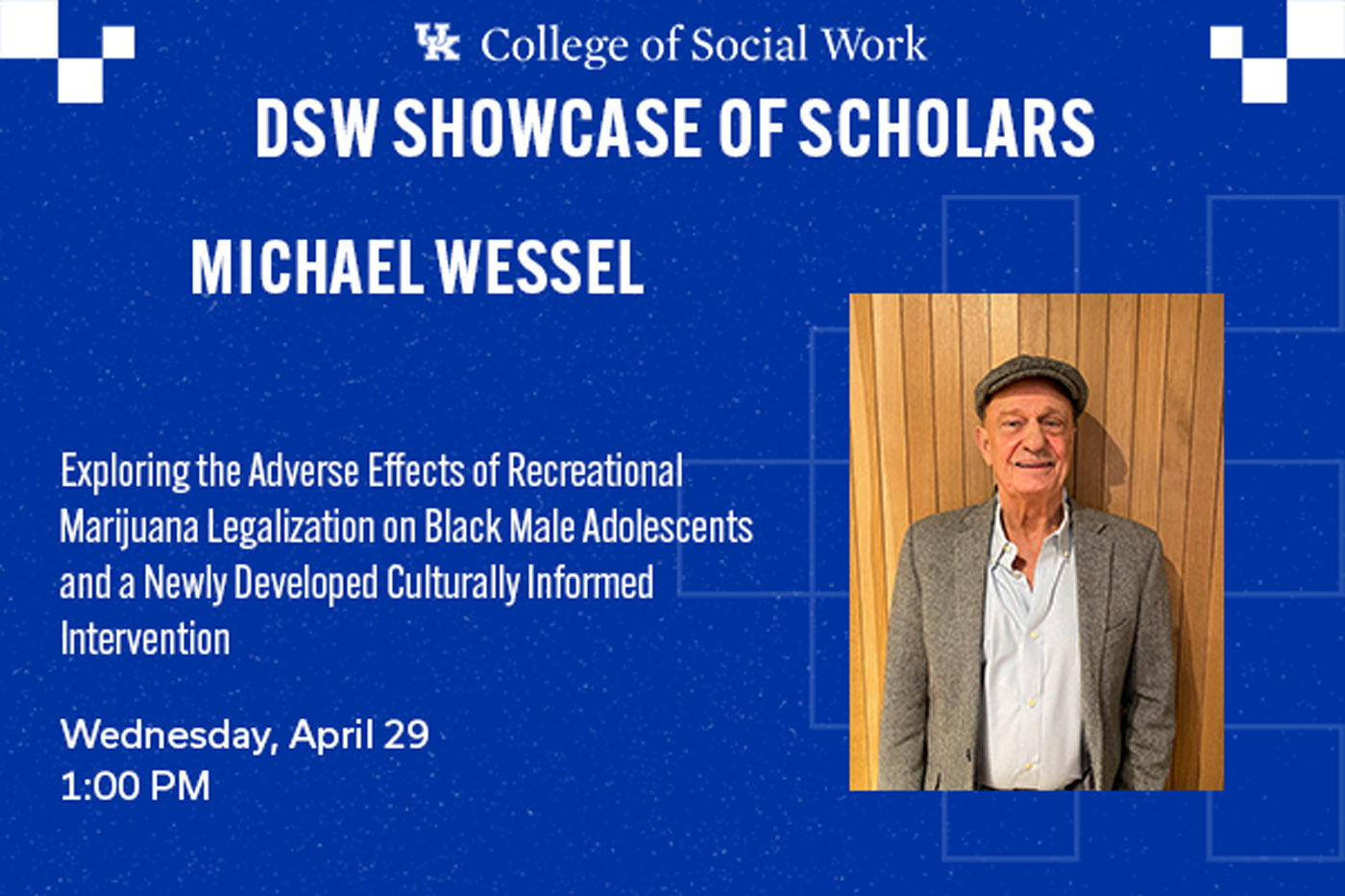
Exploring the Adverse Effects of Recreational Marijuana Legalization on Black Male Adolescents and a Newly Developed Culturally Informed Intervention
DSW Candidate – Michael Wessel
Wednesday, April 29, 2026
1:00 PM-2:15 PM Eastern Time Zone
Credit Hours: 1.0 (ACE)
Description
Exploring the Adverse Effects of Recreational Marijuana Legalization on Black Male Adolescents and a Newly Developed Culturally Informed Intervention
Learning Objectives:
Upon completion of this conference, participants will be able to:
- Identify the disproportionate social, legal, and mental health impacts of recreational marijuana legalization on blackmail adolescents.
- Explain how critical race theory, social learning theory, adverse childhood experiences, and motivational interviewing collectively inform culturally responsive substance use interventions.
- Apply culturally informed motivational interviewing strategies, including population-specific questions, to improve engagement and outcomes with blackmail adolescents suffering CUD.
- Evaluate gaps in existing adolescent substance use interventions and consider implications for social work practice, supervision, and policy.
Presenter Bio
Michael Joseph Wessel, MSW, LSW, is a Doctor of Social Work candidate at the University of Kentucky and a licensed social worker in the state of Ohio. He holds bachelor’s and master’s degrees in social work from Northern Kentucky University, awarded in May 2023 and June 2024, respectively. Mr. Wessel graduated magna cum laude with his bachelor’s degree and has earned two micro-certificates focused on gerontology and forensic social work.
Mr. Wessel currently serves as a substance use counselor and supervisor at Charlie’s Three-Quarter House, a residential recovery program providing services to adults with substance use disorders, co-occurring mental health conditions, and histories of homelessness. Michael’s clinical work emphasizes trauma-informed care, relapse prevention, motivational interviewing, and culturally responsive practice. Michael also worked at the Baron Center Shelter House located in Cincinnati, Ohio, where he served those suffering from homelessness and addiction.
His primary research interests include the intersection of substance use disorders, structural inequality, adolescent development, and emerging treatment modalities. Mr. Wessel’s doctoral capstone project examines the disproportionate harms of recreational marijuana legalization on Black male adolescents. It advances a culturally informed motivational interviewing intervention grounded in Critical Race Theory, Social Learning Theory, and Adverse Childhood Experiences (ACEs). In addition, Mr. Wessel is independently researching ibogaine, a psychoactive root originating in Central Africa, with particular attention to its potential applications in the treatment of substance use disorders and trauma-related conditions such as post-traumatic stress disorder (PTSD). Mr. Wessel’s scholarship is informed by lived experience, extensive clinical practice, and a sustained commitment to social justice, equity, and the ethical translation of research into practice.
Delivery Method: Live Interactive Training via Zoom Video Conferencing
Credit Hours: 1.0 (ACE)
Target Audience: This conference is intended for social workers and students.
Accreditation: University of Kentucky College of Social Work, Provider # 1377, is approved as an ACE provider to offer social work continuing education by the Association of Social Work Boards (ASWB) Approved Continuing Education (ACE) program. Regulatory boards are the final authority on courses accepted for continuing education credit. ACE provider approval period: 9/29/25-9/29/28. Social workers participating in this conference will receive up to 15 general continuing education credits.
Claiming CE Credit: Instructions for claiming CE credit will be disseminated at the beginning of each session.
Questions: If you have any questions regarding CE credit or to report a grievance, please contact Christina Krantz at Christina.Krantz@uky.edu. For technical assistance, please contact lmshelp@uky.edu.
Disclaimer: The views and opinions expressed in these presentations are those of the individual presenters and do not necessarily reflect the official policies or positions of the University of Kentucky or the College of Social Work. The inclusion of any topics, perspectives, or discussions is intended for academic engagement and does not constitute endorsement by the institution.